Fortified noni (Morinda citrifolia L.) cookies: formulation, properties, antioxidant activity, sensory traits
DOI:
https://doi.org/10.31989/bchd.v6i7.1150Abstract
Background: Noni, also known as Morinda citrifolia L., is a perennial herb with Southeast Asian origins that has been used medicinally for over 2000 years. Noni drew the interest of researchers from the pharmaceutical and food industries due to its adaptability and utilization of the plant's structures for various food applications. The essential industrial products of this plant are beverages, leaf powders, oil from seeds, and powders from dried fruits.
Objective: This study aimed to incorporate noni fruit powder with different concentrations to extend the cookie’s shelf life and nutritional properties.
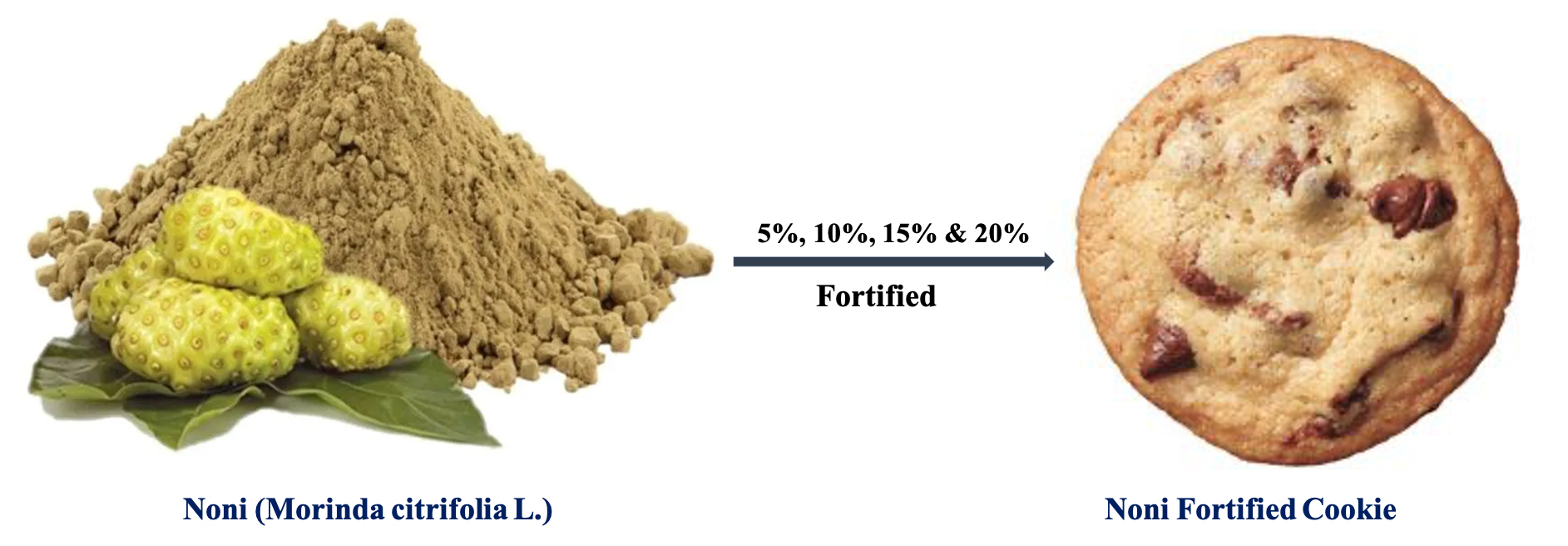
Methods: In the formulation of the cookies, noni fruit powder was fortified with four different concentrations (5% - NFPFC5, 10% -NFPFC10, 15% - NFPFC15, and 20% - NFPFC20) with wheat flour. The physical properties, antioxidant activity, and sensory characteristics of cookies fortified with noni fruit powder were studied.
Results: There was no significant change in the physical properties of fortified cookies with noni fruit powder. The antioxidant properties were enhanced with the higher concentrations of fruit noni powder fortified with cookies. Sensory panelists preferred cookies with 5% noni (NFPFC5) concerning organoleptic characteristics.
Conclusion: The present study is to understand the herb's value by recommending the nutritional qualities and sensory evaluation of noni fruit powder cookies. Future studies on the use of noni fruit powder in different food industries with its applications in terms of safety and quality are necessary.
Keywords: Noni powder, antioxidant, Morinda citrifolia, sensory acceptance, cookies.
Downloads
Published
Issue
Section
License
Authors retain the copyright of their articles and grant the Functional Food Center (FFC) and its journals the right of first publication under the terms of the Creative Commons Attribution 4.0 International License.
This license permits unrestricted use, distribution, and reproduction in any medium, including commercial use, provided the original author(s) and source are properly credited. Authors may post and share their published work freely, provided that the original publication in this journal is acknowledged.
By submitting to this journal, authors confirm that their manuscripts are original, not under consideration elsewhere, and that they hold the necessary rights to grant this license. The Functional Food Center encourages open scientific exchange and allows derivative and extended works, provided attribution to the original publication is maintained.