Screening and characterization of antioxidant, anti-aging, andanti-microbial activity of herbal extracts
DOI:
https://doi.org/10.31989/ffhd.v13i2.1070Abstract
Background: Aging is a process caused by oxidants and aging-related enzymes. Therefore, the inhibition of these processes can exacerbate anti-aging agents. This study aimed to evaluate the antioxidant and anti-aging activities of leaf extracts from seven herbs used in traditional Thai herbal remedies.
Methods: Researchers assessed the total levels of phenolic content (TPC), antioxidant, anti-collagenase, and anti-tyrosinase activity using colorimetric methods. Cytotoxicity effects were determined using MTT assays, and matrix metalloproteinases(MMPs) secretion was assessed through gelatin zymography. In addition, inhibitory effects on the growth of microorganisms were examined using the disc diffusion and broth microdilution method.
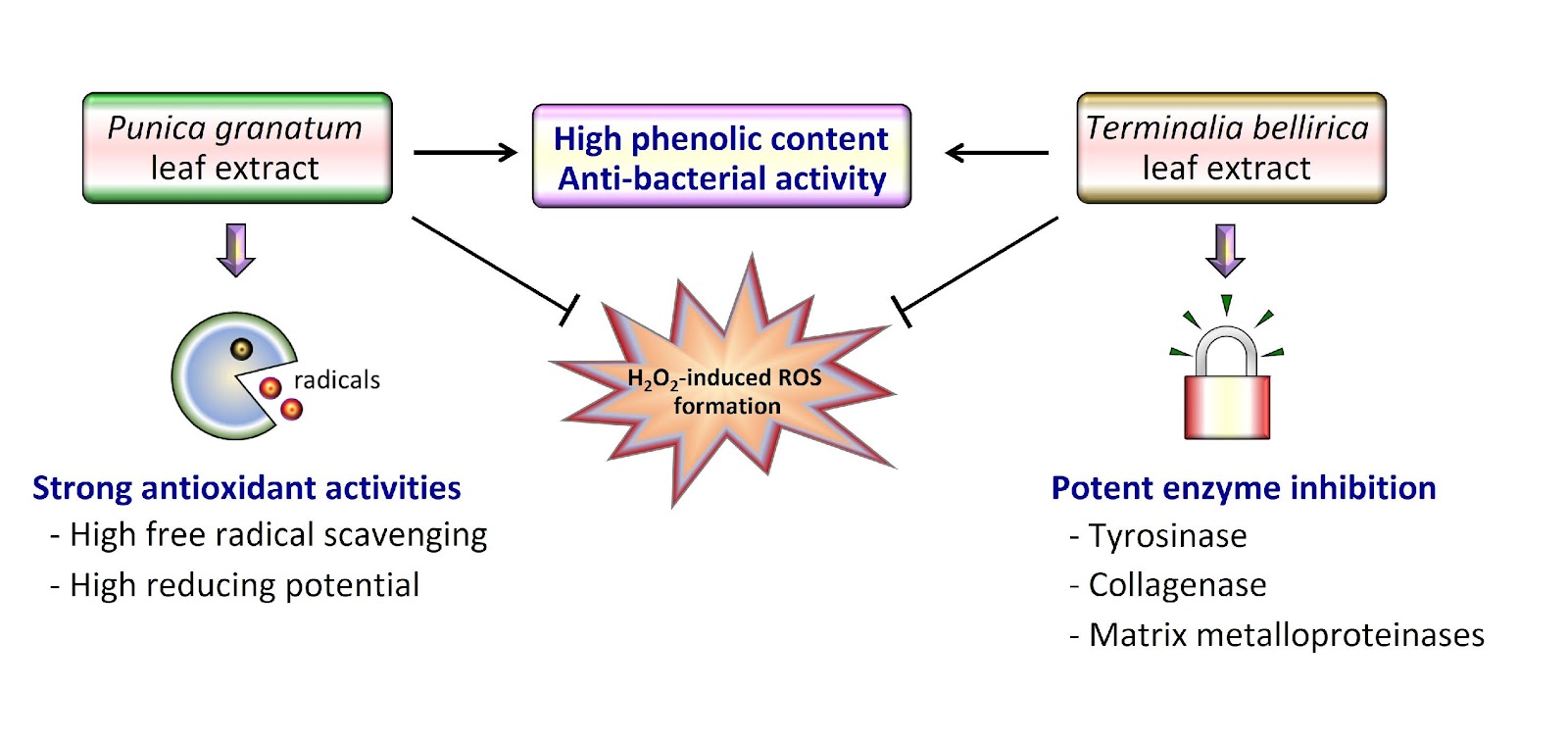
Results: TPC ranged between 48.68–440.91 mg GAE/g of ethanolic leaf extracts. High antioxidant activities against ABTS radicals were detected in P. granatum, P. emblica, P. guajava, T. bellirica, and T. chebula, while high DPPH neutralization appeared in M. coreia, P. guajava, and P. granatum. FRAP assays significantly reduced the power of T. chebula and P. granatum. T. chebula and P. guajava exhibited the highest inhibitory effect on H2O2induced ROS production. P. emblica, P. guajava, T. bellirica, and E. hygrophilus reduced tyrosinase and collagenase activities. P. gaujava, T. chebula, and T. bellirica were shown to inhibit the secretion of MMP-2 from fibroblast cells. All concentrations of leaf extracts were non-toxic to fibroblast cells. P.granatum and T. bellirica could inhibit the growth of P. acnes, E. coli, and S. aureus.
Conclusion: Preliminary studies showed that P. granatum and T. bellirica leaf extracts have antioxidants, anti-aging, and anti-bacterial activitiesand have potential for use as active ingredients for the development of functional foods and cosmetic products.
Keywords: antioxidants, anti-aging, leaf extracts
Downloads
Published
Issue
Section
License
Authors retain the copyright of their articles and grant the Functional Food Center (FFC) and its journals the right of first publication under the terms of the Creative Commons Attribution 4.0 International License.
This license permits unrestricted use, distribution, and reproduction in any medium, including commercial use, provided the original author(s) and source are properly credited. Authors may post and share their published work freely, provided that the original publication in this journal is acknowledged.
By submitting to this journal, authors confirm that their manuscripts are original, not under consideration elsewhere, and that they hold the necessary rights to grant this license. The Functional Food Center encourages open scientific exchange and allows derivative and extended works, provided attribution to the original publication is maintained.