The Effect of Roselle (Hibiscus) Juice on Mood Improvement in Healthy Adults
DOI:
https://doi.org/10.31989/ffhd.v12i10.985Abstract
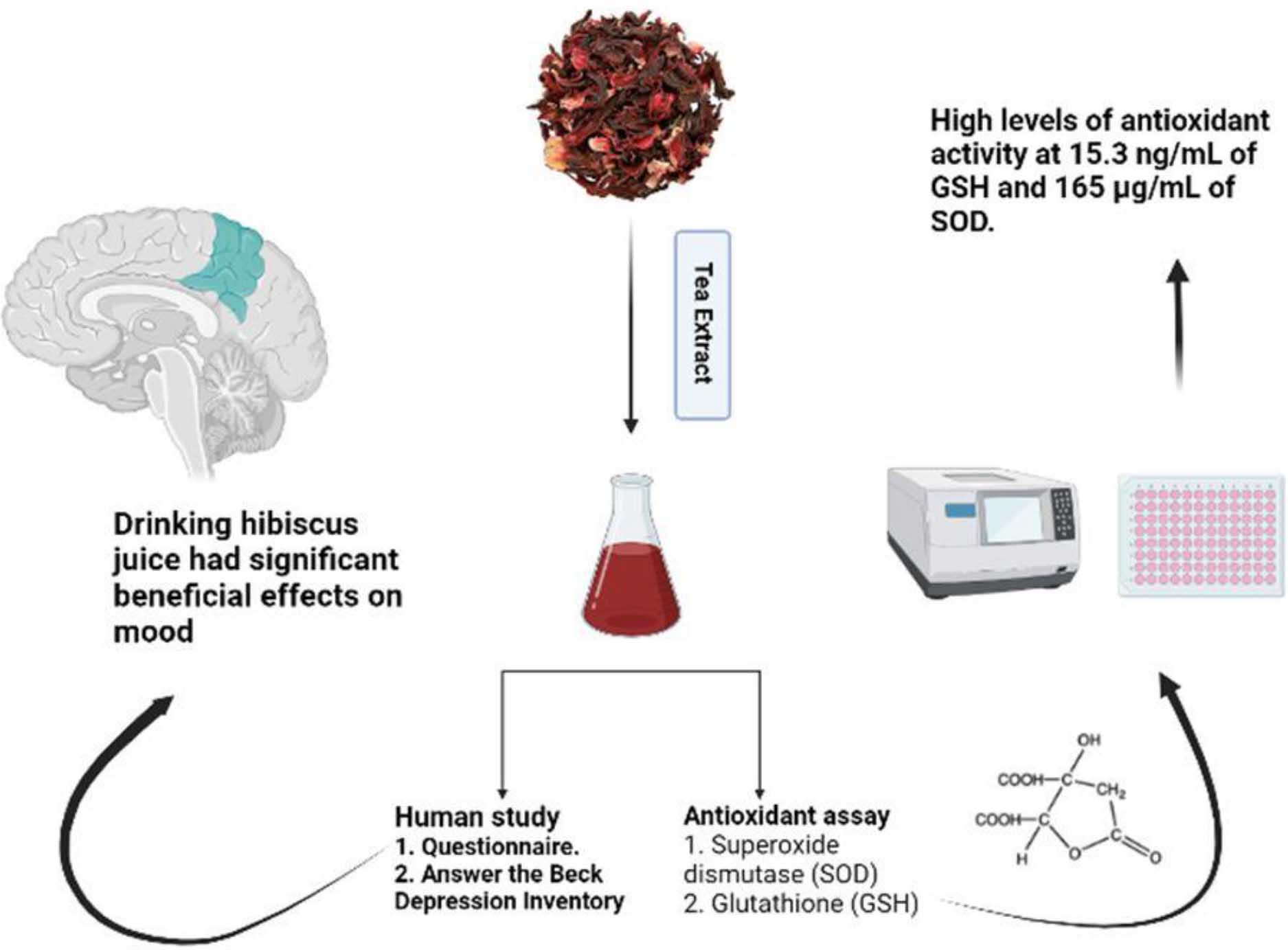
Introduction: The juice of Hibiscus sabdariffa Linn is commonly used as a traditional medicine for hypertension, pyrexia, and mood improvement. This study aimed to examine the effect of hibiscus juice on the mood states of healthy Saudi adults.
Methods: A total of 32 healthy adults were asked to complete a questionnaire and were subsequently provided with 250 mL of prepared hibiscus juice to drink daily for 1 week. The participants were instructed to answer the Beck Depression Inventory before and after 1 week of drinking the hibiscus juice daily.
Results: The results indicated a significantly positive change in the participants’ daily mood after 1 week of drinking 250 mL of hibiscus juice daily. Drinking hibiscus juice enhanced mood status by increasing relaxation and decreasing fear of the future and heart palpitations in most participants. Furthermore, it increased the consumption of caffeinated drinks. However, drinking hibiscus juice had no effect on the number of meals consumed.
Conclusion: Drinking hibiscus juice had significant beneficial effects on mood. These results may be useful for future public health recommendations, especially among young adults and children. Further studies with larger sample sizes and longer experimental durations are needed to confirm and generalise these findings.
Keywords: Mood Improvement, Cognitive, Hibiscus, Saudi Arabia, Adults
Downloads
Published
Issue
Section
License
Authors retain the copyright of their articles and grant the Functional Food Center (FFC) and its journals the right of first publication under the terms of the Creative Commons Attribution 4.0 International License.
This license permits unrestricted use, distribution, and reproduction in any medium, including commercial use, provided the original author(s) and source are properly credited. Authors may post and share their published work freely, provided that the original publication in this journal is acknowledged.
By submitting to this journal, authors confirm that their manuscripts are original, not under consideration elsewhere, and that they hold the necessary rights to grant this license. The Functional Food Center encourages open scientific exchange and allows derivative and extended works, provided attribution to the original publication is maintained.